
Good posture supports more than appearance. It influences breathing, joint health, energy levels, and long-term spinal stability. Many posture problems develop gradually due to sitting for extended hours, weak muscles, and limited movement throughout the day. The encouraging reality is that posture can improve naturally through consistent exercise that strengthens supportive muscles and restores alignment.
This article explains effective exercises that improve posture naturally and how they help the body regain balance over time.
Why Posture Matters for Overall Health
Posture reflects how the body holds itself while sitting, standing, and moving. When alignment is correct, muscles and joints work efficiently with minimal strain.
Poor posture often leads to:
- Neck stiffness
- Shoulder tightness
- Lower back discomfort
- Reduced breathing capacity
- Headaches caused by tension
- Fatigue from muscle overcompensation
Improving posture strengthens the spine’s support system and reduces stress on surrounding muscles.
Natural posture correction begins with targeted movement that activates underused muscle groups.
Common Causes of Poor Posture
Understanding what contributes to posture problems helps guide effective correction.
Typical causes include:
- Long hours of desk work
- Frequent phone use with forward head position
- Weak core muscles
- Tight chest muscles
- Limited upper back mobility
- Sedentary routines
- Improper sleeping positions
Exercises that improve posture focus on reversing these patterns through strengthening and mobility work.
Wall Angels for Upper Back Alignment
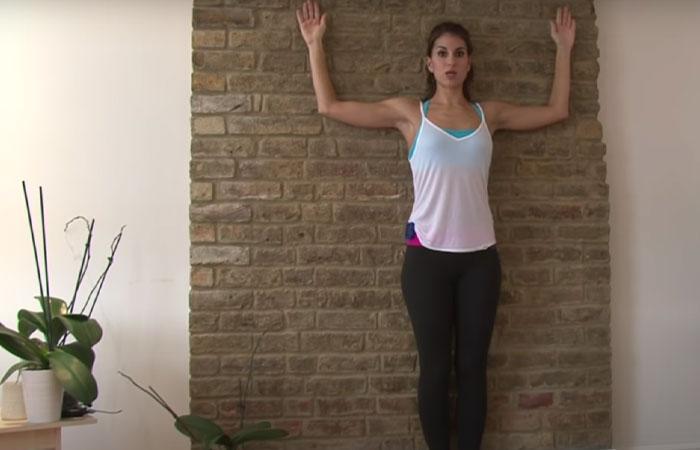
Wall angels are one of the most effective posture correction exercises because they activate the upper back and shoulder stabilizers.
To perform wall angels:
- Stand with your back against a wall
- Keep your head, shoulders, and hips touching the surface
- Raise your arms slowly into a goalpost position
- Slide them upward while maintaining contact with the wall
- Lower them back down slowly
Benefits include:
- Strengthening upper back muscles
- Opening tight chest muscles
- Improving shoulder mobility
- Encouraging proper spinal alignment
Performing this movement daily helps restore balance between the front and back of the upper body.
Chin Tucks for Forward Head Correction
Forward head posture is common among people who work at computers or look down at phones frequently.
Chin tucks strengthen deep neck muscles that support proper head alignment.
How to perform chin tucks:
- Sit or stand upright
- Gently pull your chin backward
- Keep your eyes level
- Hold for several seconds
- Release slowly
Regular practice helps reposition the head directly above the shoulders instead of leaning forward.
This small adjustment significantly reduces neck strain.
Plank Holds for Core Stability
A strong core supports the spine during daily movement. Weak abdominal muscles often contribute to slouched posture.
Plank holds activate multiple stabilizing muscles simultaneously.
Steps to perform a plank:
- Position your forearms on the floor
- Keep your body straight from head to heels
- Engage abdominal muscles
- Maintain steady breathing
- Hold for a comfortable duration
Benefits include:
- Supporting spinal alignment
- Strengthening abdominal muscles
- Reducing lower back pressure
- Improving body awareness
Even short plank sessions performed consistently produce noticeable improvements.
Chest Stretching to Reverse Rounded Shoulders
Tight chest muscles pull the shoulders forward, creating rounded posture over time.
Stretching these muscles allows the shoulders to return to a neutral position.
Simple doorway chest stretch:
- Stand inside a doorway
- Place your arms on the frame
- Step forward slowly
- Hold the stretch comfortably
This exercise improves shoulder positioning and reduces tension across the front of the upper body.
Regular stretching restores balance between opposing muscle groups.
Bird Dog Exercise for Spinal Stability
The bird dog exercise strengthens muscles that stabilize the spine during movement.
To perform the bird dog:
- Begin on hands and knees
- Extend one arm forward
- Extend the opposite leg backward
- Keep hips level
- Return slowly and switch sides
This exercise improves:
- Core strength
- Balance
- Coordination
- Lower back support
Controlled movement is more important than speed.
Shoulder Blade Squeezes for Upper Back Strength
Weak upper back muscles contribute heavily to poor posture.
Shoulder blade squeezes activate these muscles effectively.
Steps:
- Sit or stand upright
- Pull shoulder blades together gently
- Hold briefly
- Release slowly
Benefits include:
- Supporting upright posture
- Reducing shoulder rounding
- Strengthening mid-back muscles
- Improving spinal awareness
This exercise can be performed multiple times throughout the day.
Glute Bridges for Pelvic Alignment
The pelvis plays a major role in posture. Weak glute muscles often contribute to lower back strain and forward pelvic tilt.
Glute bridges strengthen the muscles responsible for stabilizing the hips.
To perform glute bridges:
- Lie on your back
- Bend your knees
- Lift hips upward
- Engage glute muscles
- Lower slowly
Consistent practice improves:
- Hip stability
- Lower back support
- Pelvic positioning
- Walking mechanics
Stronger hips create a stronger foundation for posture correction.
Thoracic Extensions for Upper Spine Mobility
Limited mobility in the upper spine encourages slouching behavior.
Thoracic extensions restore flexibility in this area.
Simple method:
- Sit upright in a chair
- Place hands behind your head
- Gently lean backward over the chair support
- Return to neutral position
Benefits include:
- Improving spinal flexibility
- Reducing upper back stiffness
- Encouraging upright sitting posture
- Supporting breathing capacity
This movement is especially useful for people who sit frequently.
Hip Flexor Stretches for Sitting-Related Posture Issues
Long sitting sessions shorten hip flexor muscles, which can pull the pelvis forward and affect spinal alignment.
Stretching hip flexors restores balance.
Steps:
- Step one foot forward into a lunge position
- Lower hips gently
- Keep torso upright
- Hold comfortably
Benefits include:
- Improving pelvic alignment
- Reducing lower back tension
- Supporting upright standing posture
- Increasing walking comfort
Flexible hips support natural posture during movement.
Back Extension Exercises for Spinal Support
Back extension movements strengthen muscles along the spine.
Basic floor back extension:
- Lie face down
- Lift chest slightly from the floor
- Keep neck neutral
- Lower slowly
This exercise helps:
- Strengthen spinal muscles
- Improve posture endurance
- Support upright sitting
- Reduce fatigue-related slouching
Controlled movement improves effectiveness.
How Often Posture Exercises Should Be Practiced
Consistency produces better results than intensity.
Most posture correction exercises can be performed daily.
Suggested routine:
- 10 minutes of stretching
- 10 minutes of strengthening exercises
- Brief posture checks throughout the day
Improvement often begins within a few weeks when exercises are practiced regularly.
Short sessions performed consistently create lasting change.
Additional Daily Habits That Support Better Posture
Exercise works best when combined with supportive lifestyle habits.
Helpful adjustments include:
- Keeping screens at eye level
- Sitting with feet flat on the floor
- Avoiding prolonged static positions
- Taking movement breaks every hour
- Sleeping with supportive pillows
- Carrying weight evenly between shoulders
These changes reinforce the benefits created through posture exercises.
Signs That Posture Is Improving Naturally
Many improvements appear gradually.
Common positive signs include:
- Reduced neck tension
- Less shoulder stiffness
- Improved breathing comfort
- Increased sitting endurance
- Better walking alignment
- Greater awareness of body position
Small improvements accumulate into lasting structural support over time.
FAQ Section
Can posture exercises help reduce tension headaches
Yes. Strengthening neck and upper back muscles improves alignment and reduces muscle strain that often contributes to tension headaches.
Is it possible to correct posture without visiting a specialist
Many posture issues improve through regular strengthening and stretching routines, although persistent pain should be evaluated by a healthcare professional.
Do posture exercises help improve breathing capacity
Yes. Upright posture allows the lungs to expand more efficiently, which improves breathing depth and comfort.
Are posture exercises safe for older adults
Most posture exercises are safe when performed gently and consistently. Modifications can be made to match comfort levels and mobility.
Can sleeping position affect posture during the day
Yes. Poor sleeping support can influence spinal alignment and contribute to stiffness that carries into daytime posture habits.
How long should posture exercises be performed each day
Fifteen to twenty minutes of daily posture-focused movement is usually enough to produce noticeable improvement over time.
Do posture exercises improve balance and coordination
Yes. Strengthening stabilizing muscles enhances body awareness and improves balance during standing and walking activities.
